Voluntourism for time-crunched travelers.

Great profile of Globe Aware in the May 2014 edition of ‘Sky’, Delta Air Lines’ onboard magazine:

BREAK AWAY

Globe Aware: A voluntourism outfit for time-crunched travelers

BY LISA ROUNDS

globe awareWhile traveling for business in the late 1990s, Kimberly Haley-Coleman o en found herself in foreign countries with free time on her hands and a desire to see beyond the traditional tourist attractions. On one trip to Brazil, she remembers looking for short volunteer opportunities but could only and multiweek options.
"I found that so many people wanted the same thing I did, but once you' ve got kids, a mortgage and a busy lifestyle, you can' t go and take three weeks off," says the former global strategist and business development officer whose portfolio includes CNBC.com. "Everyone dreams of going into the Peace Corps, but that' s a two-and-a-half-year commitment."
In 2000, Haley-Coleman founded Globe Aware, a nonprofit specializing in weeklong service-inspired vacations around the world. Since then, the voluntourism movement has taken hold, and many other nonprofit and for-profit companies are offering shorter trips catering to busy Westerners with limited vacation days. Most of Globe Aware' s programs, now available in 15 countries, are built around a predetermined service project that can be finished in seven days. From installing concrete floors in the homes of Guatemalan single mothers to building wheelchairs for Cambodian land mine victims, participants spend 30 to 50 hours working in an immersive environment, with the option of visiting the area' s important attractions in their free time. But even the traditional tourist activities are designed to promote cultural awareness. Coffee-tasting in Costa Rica? Globe Aware arranges it with a family in their private home as opposed to in a factory.
"Our volunteers come away with a real under-standing of both the beauties and the challenges of a culture," says Haley-Coleman. "I would argue that' s more important than the physical projects we work on' being able to make that human connection and understand each other' s view of the world."
Globe Aware' s trips start around $1,100; globeaware.org

Self

Family Volunteer Vacation in Cambodia

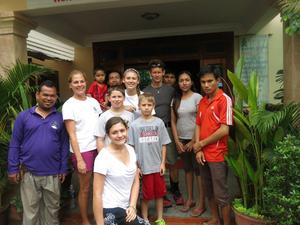
our family and meangs familyA Dallas family' s week-long volunteer vacation in Cambodia harvested a new global perspective for their four children, ages 10-17. Feeling that their kids were at an age where they were ready for a different type of travel experience, parents Stan and Lezlie decided a family service trip with Globe Aware was the perfect fit for them. Their goals were two-fold: to have their children understand that satisfaction and happiness are not tied to material wealth, and to have them understand that humans are the same around the world and that we all have more in common than differences. Prior to departing, Lezlie and Stan discussed expectations with their children to help prepare them for the poverty and difficult scenes they might encounter during their trip. While the children may have been ready for the work they would do and the people they would meet, nothing could have prepared them for the overall eye-opening experience that would ultimately change their lives.

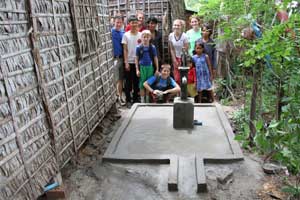
For their volunteer project, the family spent time building a well for the community, assembling and distributing wheel chairs to landmine victims, and teaching English at Friends of the Orphan Children Organization (FOCO), a local non-governmental organization that provides schooling for disadvantaged children in Siem Reap. It was during their time at the school that the family became intimately acquainted with the richness and reality of the Cambodian culture.

Claudia, the family' s 15 year old, was taken aback by the positivity of the Cambodians amidst their living conditions. Over 30 children both attended school and lived together in a small facility that Claudia quickly realized was not even half the size of her entire house. Yet despite their living conditions and lack of material luxuries, the children were full of joy, respectful, and welcoming to friends and strangers. Caiden, the family' s youngest, also noticed the unquenchable joy of the Cambodians: "The kids in Cambodia are different from the kids here in the U.S. because they are just happy, and kids here always want more. They were always smiling, even when they had to go help work."

our-famiy-and-meang-at-wellDuring English lessons, the family members each had a chance to spend time with students, learn about their lives, and get to know more about who they are. One particular young girl stood out to the family. Full of smiles and giggles, her tiny frame exuded to all those around her a contagious joy that would have deceived anyone of her traumatic past. Although she looked no older than four years old, the family discovered from one of the FOCO staff that she was actually nine, and further learned that she came from an abusive past and a tragically broken family.

Filled with sorrow for the girl' s heartrending story and a desire for justice, the family was moved to consider how they might further enrich these children' s lives. The school had recently commenced a new project to expand the facilities but was restricted to complete the work within a certain time period, even though the necessary funds were not available. Stan and Lezlie consulted their family for how they would like to help, and they unanimously agreed they would love to contribute to the funding of the school' s new building.

well-family-and-chanda-and-usMotivating the family' s decision to help the children was the relentless reminder of the differences between their own lifestyle and that of the Cambodians. As Claudia describes, "We saw the difference " I have two computers, a cell phone, an air mattress, an iPhone, an iPad " and, these kids, all they have a long bench of wood for a bed with a picnic covering, two shelves in a room, and some books. Fifteen kids slept in a room just the size of my room."

Both Claudia and her 17-year-old sister, Maggie, recognize that because of their age, their 10- and 13-year-old brothers, Caiden and Liam, may not have fully grasped the impact of poverty on the Cambodian people. But everyone agrees that having young volunteers on the trip made the experience all the richer. As the same age as most of the students, Caiden and Liam were able to relate with them in a special way, offering a unique connection. Liam explains his perspective on the experience: "It was really hard to understand how the Cambodians lived compared to how I live. The biggest difference was the way they acted " everyone was so happy and nice, as happy as the richest people over here. It was really different from what I was used to and eye opening to how privileged I am."

Walking away from the trip, the children of the family all realized that there is something rich and fulfilling in the lives of the Cambodians that the American culture may not have tapped into yet. Reflecting on this mystery, Claudia profoundly noted "I think they are so happy because they don' t have to worry about the social media and the money and the business and famous people and the media. It makes life so much more simple and so much more meaningful than getting a like on a Facebook picture." Even more notably, Maggie and Claudia were both impacted by the appreciation for education they saw from the Cambodian children. The girls were inspired that rather than complaining or begrudgingly go to school, as their peers often do, the kids were eager to learn and excited to soak up all the knowledge they could.

wheelchair-recipients-group-shotIn addition to funding the school project, the family' s help with FOCO in Cambodia has not halted since their return. Unable to shake the now-familiar realities of young children who live off a dollar a day and possess only one outfit to wear for the week, the four children have been inspired to continue their support of the students at FOCO. As Maggie recaps, "The work the school does is of such a benefit to the lives of these children and their communities, and the teachers and staff are really fun and caring people. I am so happy and grateful that I was able to be involved in this school, and I hope to continue to help even while in Dallas." And help she has, as she is currently in the planning stages of launching a literacy and pen pal project to connect peers at her school with students at FOCO.

Assuredly, any parent would be proud to hear their child respond to a volunteer experience with the openness, positivity, and initiative that this family' s children have demonstrated. But the development of characteristics like cultural awareness and generosity can only be attributed to the children' s first-hand observation of authentic parents who demonstrate compassion for humankind and a desire to contribute to other cultures. It is thanks to commendable parents such as these that global citizens rise up and take action to change the world.


Self

Volunteer trips that actually help

peru-volunteer-vacationsGreat CNN.com story from 2010 on volunteer vacations and finding the one that fits right and provides the greatest benefits to the destination community:

The idea of volunteering away from home seems like a win-win to many travelers: a way to experience and help another community at the same time. But without a solid, well-designed program and reasonable expectations, volunteer travel can do more harm than good.

Showing up in parts unknown, hoping to make a big difference in a small amount of time, is likely to leave travelers and hosts disappointed.

“You’re not going to change the world in a week or two. You’re not going to eradicate poverty in a village. You’re not going to teach a kid how to read,” said Doug Cutchins, a former Peace Corps volunteer and co-author of “Volunteer Vacations: Short-term Adventures That Will Benefit You and Others."

The key to having a positive impact in a short amount of time is realizing that your efforts are part of a process, Cutchins said. Results are subtle and come about slowly through a long line of volunteers.

“Development is a tricky process, and as Americans we are very, very product-oriented,” he said.

He’s concerned with what he calls “development by monument,” where volunteers want a completed building or another physical representation of their volunteer efforts to answer the inevitable “what did you accomplish?” question from friends and family at home.

“That’s one of the first questions you’re going to get asked, and it’s hard sometimes for people to say, ‘well, I was kind of part of a process, and we engaged in cultural exchange.’ But that’s really the very best way to do it,” Cutchins said.

Daniela Papi agrees. She is one of the founders of PEPY, a non-governmental organization dedicated to educational development in rural Cambodia. PEPY Tours hosts learning trips that help fund the group’s projects.

The organization has gone from referring to those trips as “voluntourism” to calling them “edu-tourism” or “educational adventures."

“The number one thing that’s going to happen is that you are going to have a new perspective on your country, on your life, on your choices and how they affect the world, on what it means to live in whatever country that is,” Papi said.

The 10 days or so spent traveling and learning would ideally inform participants’ choices and outlook at home, where they will have the largest impact, Papi said.

Finding volunteer trips that actually help – CNN.com http://www.cnn.com/2010/TRAVEL/05/31/voluntourism.tips/index.html 1 of 3 5/7/2013 1:47 PM Teaching English and construction projects are the most common types of voluntourism projects Papi sees in her region. Travelers involved in a construction voluntourism project should ask the operator and organizations involved about the plans for the structure when the volunteers go home, she cautions. Who is going to take care of it, who will work in it, how will they be trained, and who will fund the training? A poorly constructed school without trained teachers isn’t likely to have the benefits volunteers envision. And in the case of teaching English, who will teach the children when there are no volunteers, and what effect does a revolving-door model of teaching have on kids? Successful projects start with the needs of the community, voluntourism organizers say.

“We don’t go in and say, ‘this is what your problem is, and this is how we’re going to fix it,’ ” said Catherine McMillan, a spokeswoman for Globe Aware, a nonprofit that develops short-term volunteer programs.

Members of the community should be involved in identifying and addressing areas where partner organizations can help.

The organization you’re working with should have a strong and ongoing relationship with the community, local non-governmental organizations and project leaders on the ground.

“It’s a complicated kind of tourism, because you don’t want to send folks and do something and then not have, not measure the consequences of that action in the long term,” said Erica Harms, director of the Tourism Sustainability Council, an initiative involving the United Nations and travel partners.

Travelers should ask about the program’s history and its involvement with NGOs or other organizations. Find out where the funding is coming from and where it is being allocated. Ask about how the project is supported over time and how the community was involved in its development, Harms said.

And keep in mind that organizing volunteers to help support these efforts is not free. There are costs associated with housing and feeding volunteers, with transporting them locally, with training them and establishing a system of working that allows visitors to contribute for a short period.

Most of Globe Aware’s programs require a contribution fee of approximately $1,200 per week, which does not include airfare. PEPY Tours cost $500 to $700 a week, plus a fundraising or donation minimum of $500 for individuals.

PEPY Tours participants are giving back mostly through their financial support — which is what will keep the education projects running, Papi said. But visitors can see where their money is going and may have an opportunity to get physically involved.

Cutchins says reputable organizations will be up-front about costs, what is included and where your money will be spent.

Globe Aware’s McMillan recommends looking up nonprofits on Guidestar.org, which compiles tax forms from nonprofits, to see how operators are spending. It’s also a good idea to contact past volunteers or people who are familiar with the organization’s work on site.

Travelers should be realistic about what would make for a positive experience and select opportunities that fit their skills and interests.

“I think there are very few people who would make really bad volunteers. … It’s really about matching the Finding volunteer trips that actually help the right person with the right opportunity,” Cutchins said.

Christmas in Cambodia

Volunteer vacation CambodiaTexas family spend Christmas in Cambodia on volunteer vacation with Globe Aware

St. Michael’s Catholic Academy Freshman Quentin Bentzin and his family traveled to Siem Reap, Cambodia, over Christmas on a family service trip.

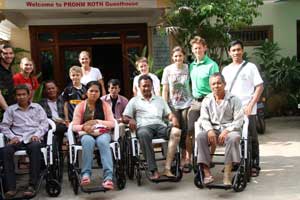
The group of 14 did a variety of service work, including assembling wheelchairs donated by www.freewheelchairmission. org and then delivering them to disabled Cambodians.

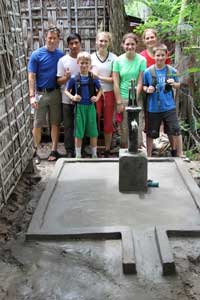
Pictured at right is Quentin mixing concrete for the floor of a village water pump. Quentin is also pictured with a young Cambodian girl whose bedroom the group had painted and furnished.Volunteer vacation Cambodia

Siem Reap is the capital city of Siem Reap Province in northwestern Cambodia and is also home to the famous Angkor Wat temple.

“This trip was an incredible opportunity for my family to learn about Southeast Asia while helping others,” Bentzin commented.


West Austin News

Voluntourism films inspire others

California couple hopes their voluntourism films inspire others

A LITTLE MORE than three years ago, Steve and Joanie Wynn were looking to get out of a rut. Their video production company, Bayside Entertainment, was in a slump along with the rest of the economy.

So when Joanie Wynn stumbled upon Roadmonkey Adventure Philanthropy, a fledgling business started by a former New York Times war correspondent, she thought, here’s a chance to do something different ' document six women volunteering at a school for AIDS orphans in Tanzania while also enjoying a trip abroad and scaling Mount Kilimanjaro.

The experience was “life-changing.” The Muir Beach couple returned with a lot more than a sense of adventure and some great footage; they discovered a new purpose and passion.

“We both traveled extensively before and to Africa before on various projects,” says Joanie Wynn, who worked in Hollywood for clients such as Disney, Sony and Dreamworks. “But we were amazed by the transformation by the people who were on the trip, and we came back and thought, wow ' these are the stories we really want to tell.”


They launched Journey for Good (http://journeys4good.com), a website that lists voluntourism opportunities in hopes of inspiring others to participate. Their documentary, “A Journey for Good: Tanzania,” which aired on public TV stations around the country, garnered four Emmy nominations and two Telly Awards. Now they’re in talks with KQED to turn “Journeys for Good” into a series.

“Travel programs resonate with our audiences” says Scott Dwyer, KQED’s director of programming. “‘A Journey for Good’ was the first travel show I’ve seen that expanded the definition what a vacation can be when you include ‘doing good’ at the same time. I think the producers are on to something.”

The Wynns and their 9-year-old son, Ryan, a third-grader at Willow Creek Academy in Sausalito, left for Cambodia on Dec. 26 with Global Aware to document their second voluntourism trip together. (Last spring, Steve Wynn traveled with a group of women who built a playground at a school in Nicaragua.) This time, the family is joining others in building wheelchairs for land mine victims, teach English to Buddhist monks and a well at a home for the disabled.

Their focus is not only on the projects, but also on the people who volunteer ' what motivated them, how it changed them.

“Our goal is to show people that this is a great way to travel differently,” she says. “You can still go and experience a different culture, a different country and have an even richer and deeper experience by working side-by-side with local people.”

Working with locals is an entirely different experience than arriving in a village or community to donate books or schoolbags, she says.

The Wynns got close to the teachers, students and local laborers as well as the bibi ' the Swahili word for grandmother ' who started the school as they built desks, refurbished classrooms and installed a water filtration system among other improvements together.

“We felt so honored to be invited into her home and share lunch each day,” Joanie Wynn, 48, says. “Those are experiences you don’t get to do just by being a tourist.”

“The connection was not just with the people we were serving but the people we were following,” Steve Wynn, 52, says. “It was really neat to see how they changed and how their view of the world changed. You could see the potential ripple effect.”

Neither had done extensive volunteering before, although Steve Wynn, a Marin native and longtime cameraman who has worked with the Discovery, History and Travel channels, has been a Muir Beach volunteer firefighter since 2009 and the chief for the past year.

Voluntourism has been one of the fastest growing forms of travel, according to volunTourism.org, which follows the industry. Last year, global guidelines were developed for the first time to help voluntourism organizations focus on sustainable projects, community needs and responsibility.

That’s important to the Wynns, too, who only establish relationships with nonprofit groups that embrace that philosophy for their series.

“It’s really important that the trips that we do and the trips that we cover, to go with well-vetted organizations who have been around for a while, who focus on sustainable projects and that really have good in-country relationships with nonprofit organizations so you know that it’s a good project that will actually benefit the local people,” she says.

So far the Wynns have had to raise the money for the series themselves. “It’s still a passion project,” she says.

But the stories need to be told, they believe.

“If more people do the smaller projects, bit by bit, it can make a bigger impact,” says Steve Wynn.


Marin Independent Journal

Improve Your Relationship

Elisabeth Joy LaMotte, Psychotherapist; Author, ‘Overcoming Your Parents' Divorce: 5 Steps to a Happy Relationship’ and contibutor to The Huffington Post, suggests a volunteer vacation may help your relationship:

relationshipsAs a couples therapist, I hear a lot about the challenge of finding quality time and the importance of vacations. Many couples are balancing two demanding careers not to mention kids, chores and family demands. It is no wonder that when couples do finally plan some romantic time away, many opt to lie on a beach somewhere — preferably a location accessible through a direct flight — and chill. Many couples and families are getting ready to do just that for the last few days of summer. For sure, unstructured beach time is a wonderful way to de-stress, reconnect and recharge.

However, in terms of building intimacy through shared experiences, lounging on a beach is not necessarily the answer. Through my work with many couples, I notice that planning a brief vacation doing something more meaningful (and less vegetative) can do a lot to enhance a relationship. As a client recently described:

My wife and I plan such luxurious trips to treat ourselves since our work is so demanding. But the volunteer trip we took with our church did more for our marriage than any five-star restaurant or high-end resort. We were helping others together and it was such a welcome change of pace from the rhythm of our daily routine. Sharing a joint purpose and taking the focus off of daily life brought us back to what it was like when we first met.

Whether vacationing as a couple or as a family, there are many options through which your vacation time can be used to make a genuine difference.

GlobeAware, Habitat for Humanity and American Red Cross are a few of the wonderful organizations to consider. Many places of worship also arrange trips to volunteer. Or , since it is election season, consider volunteering on a political campaign.

Pick a candidate you both truly believe in. Spending a weekend with your partner canvassing for a candidate you respect can help make a difference and help your relationship. (Plus, canvassing is good exercise!) No, it is not necessarily relaxing, so take your relaxing holiday this weekend and plan something more meaningful for a weekend (or week) in the fall.

It is not uncommon to feel hesitant about taking a trip to volunteer. The experience will obviously entail breaking out of your routine and going beyond your daily comfort zone. However, try to push through that hesitation and tell yourself that you and your relationship will grow from the experience!


New family traditions through volunteer vacations

Now here' s a unique twist on a family holiday. Writer Wendy Donahue in the Chicago Tribune suggests integrating and incorporating annual traditions into a truly memorable and possibly life-changing event:

Happy faux-lidays

Extended families create their own reason to celebrate each other

By Wendy Donahue, Tribune Newspapers

3:13 PM CST, March 6, 2012

Every year, Marie Puskas and her extended family put all of their eggs in one basket ' along with their Valentines, New Year’s noisemakers, Christmas gifts, Thanksgiving fixings and Halloween treats.

Naturally, they call this annual family gathering “New Valeastweengivingmas,” a contraction of several holidays, and it is celebrated in July or August at her parents’ house in Daytona Beach, Fla.

“We count down to midnight, give valentines in Easter eggs, dress up in Halloween costumes, have a Thanksgiving dinner and have a secret Santa/white elephant gift exchange,” said Puskas, who lives in Tampa.

Just over a dozen family members, along with some family friends, travel from across Florida for this off-peak holiday rush, which dates to 2003.

“We weren’t sure if we’d all be able to get together once we all had families,” Puskas said, “so this is one tradition we make sure stays intact.”

Modern family life has birthed a brood of custom holidays, often to preserve closeness while easing logistical and financial pressures on extended, blended and interfaith families separated by miles. Sometimes they honor sacred milestones (the date of a child’s adoption, often called “gotcha day”). Sometimes, they’re whimsical (the date a boat goes in the water after winter, christened “Cold Duck Day” by one family because the “really cheap” wine was all they had aboard to toast the launch the first year).

A venerable holiday twist for extended families involves shifting the celebration of Christmas to a few weeks before or a few days after Dec. 25 ' which one family christened “Mockmas” ' in part so that individual families can wake up on Christmas Day in their own homes. On the opposite end of the calendar is the old-fashioned family reunion in summertime when kids don’t have school and travel conditions are more hospitable.

Even somber events can spin off annual celebrations. The family of Melissa Byers of Myrtle Beach, S.C., marks the date of her father’s death.

“I know that sounds weird, but we go to his favorite restaurant, make his favorite dessert, etc.,” Byers said. “We’re on year three in March and the first two were festive, not sad. No balloons or anything, but time that we deliberately remember and enjoy the things he did. It’s nice.”

Birth of a complicated schedule

But, as Puskas said, it’s the birth of babies that most universally redefines holidays for families.

“It’s a time of complete reinvention in some ways,” said Linda Murray, editor in chief of babycenter.com. Its recent poll found that 23 percent of respondents stayed closer to home after having a baby, with 44 percent describing the traditional holiday season in their home as “a reasonably low-key event with just a few gatherings and a handful of relatives. Fourteen percent described theirs as a “quiet event at home with just our immediate family.”

Many new parents report that they initially travel more than they did before, introducing the baby to relatives. Once a child turns 2, constantly on the go and requiring a separate plane ticket, air travel declines, Murray said. Then the school years start, with new financial demands, hectic schedules and limited breaks.

But Murray cited a surprise in the babycenter.com poll: 92 percent of parents will pull their children out of school to travel with them “and not feel guilty about it.”

She speculates that might be feeding alternative-holiday momentum.

It’s a big world out there

“Parents tell us they have a real belief in life experience,” Murray said. “The opportunity to see another place or learn something new or bond together as a family, they really value those things on par with traditional education.”

That’s why some families have turned volunteerism vacations into annual holidays.

Through the Globe Aware (globeaware.org) organization, Mark Edwards and his family have assembled desks for a school in Ghana, painted a school in Laos and built stoves in Peru. That was their first trip when their youngest of three daughters was 9 and their unheated hostel meant sleeping in all of their clothes to stay warm.

“But our kids never complained,” said Edwards, who lives in Boston. “They loved it, we loved it, and we were hooked.”

Globe Aware, which is one of the partners on GoVoluntouring.com, reports that about 40 percent of families turn its trips into an annual rite, though families make up only 15 to 25 percent of its volunteers.

“We’ve seen many multigenerational families ' kids, together with their parents and grandparents ' all traveling with one another as a bonding experience in a truly unique and wonderful environment,” said Kimberly Haley-Coleman, executive director of Globe Aware.

Friendship matters

Other faux-lidays aren’t just centered on the traditional definition of family. Some surround friendship.

“Two of my good friends have birthdays three days apart from each other,” said Jenny Des Jarlais, who lives in northern California. “They’re the same age for just those three days out of the year. They consider it a three-day period of celebration.”

Celebrations of half-birthdays have become commonplace for kids whose birthdays are lost in the December or summer shuffle, as with Murray’s daughter, who was born on New Year’s Eve. Murray points out a related post on babycenter.com:

“My sister’s and my birthdays fell at inconvenient times (hers is Dec. 21, mine Jan. 4), so rather than let them get overlooked or run together with Christmas, my family would throw us a joint ‘unbirthday party’ some time when everybody could come. And we’d usually watch ‘Alice in Wonderland,’ where the Mad Hatter explains that everybody gets 364 unbirthdays a year.”

A new holiday dawning

Thinking about proposing a new holiday for your extended family? For 64 years, relatives of Jessica Hebenstreit have gathered for the Benz Family Reunion at Rathbun Lake in Iowa. Here are five ways they started and sustained the tradition.

Agree on a day that remains clear year after year, such as “the second Sunday of July.” Once there’s reasonable consensus, stick to it to avoid confusion.

Make the official celebration a single-day event, then individual families can tailor their trip to their liking. Hebenstreit’s relatives start trickling in as much as a week in advance.

Pick a destination with some affordable recreational options. They don’t have to be highfalutin. “People go boating on the lake, spend time in town; generally, the adults find their way to the local pool hall,” Hebenstreit says.

Schedule some events, but not too many. A little bit of “corny” is OK too ' it’s family. “On Saturday we have a weenie roast at the campgrounds,” Hebenstreit says. “Sunday entails a potluck, a family report given by a member of each of the families on the past year, prayer, singing of songs, games for the children.”

Tend to business for the next year while everyone is there. On Sunday, Hebenstreit says her family passes a hat to raise money to reserve the shelters for the next year as well as to make a donation to the cemetery where their forebears, Charles and Anna Benz, are buried. They also elect a president and vice president who are responsible for booking the shelters and ensuring the reunion takes place the next year.

Experienced Volunteer for Cuzco Children

Travelocity`s Travel for Good voluntourism grant competition is underway. If you are interested in applying for one of Travelocity`s $5,000 voluntourism grants, click here, to learn more about Travelocity`s eight Signature Trips and choose the volunteer vacation that inspires you.

In 2011, Travelocity is committed to supporting these special projects and helping each achieve its goals. You are also encouraged to vote on the video submissions made by individuals who explain which Signature Trip inspires them and why.

The $5,000 Travel for Good voluntourism grant gives individuals a chance to give back to the communities they visit on vacation–either for just a few days or even for a few months. This grant will fund up to $5,000 for the transportation to, as well as the cost of, a voluntourism trip. Just choose a Signature Trip from one of Travelocity`s partners, including Globe Aware, make a video of two minutes or less, upload it to Travelocity`s site, and then send it around to friends and family for voting.

Contestants must be legal residents of the United States to win the grant.


How to Change the World: Globe Aware featured in WSJ

Kelly Greene, a staff reporter for The Wall Street Journal in New York, considered how individuals can change the world on a limited budget. She notes that one of the the best methods was through a volunteer vacation with Globe Aware. Read the Dec. 20, 2010 article in its entirety:

How to Change the World…

…Whatever the size of your wallet. These ideas, with budgets from $20 to $20,000, can help better the lives of others' and your own.

By KELLY GREENE

Got any plans for next week? Perhaps you could begin changing the world.

Yes, household budgets remain tight. But you don’t have to be a lottery winner to make a difference in your community or halfway around the globe. People who are winding down first or primary careers and looking for new directions are discovering that for the cost of a weekend getaway, they can help change the world. Or start to.

Bob and Jo Link, for instance, retirees in Portland, Ore., serve on a nonprofit board that awards scholarships in Belize. Mr. Link, age 69, also troubleshoots computer problems for African refugees. This after the couple spent two years in the Peace Corps, helped with Hurricane Katrina cleanup, assembled computers for schools in Guatemala and worked with deaf orphans in Peru.

The cost to them? A few plane tickets, some scholarship donations and sweat equity.

“When you do this kind of stuff, you get back more than you really expect,” Mr. Link says. “A lot of people wouldn’t, or couldn’t, put two years into the Peace Corps, but they could afford to spend a week in Peru.”

We decided to look for ways that people, whatever the size of their savings, can change the lives of others' and their own. So go ahead: Pick one of the following budgets and write it on your calendar: “CTW.”

$100 and Under

SERVICE PROGRAMS: In some cases, you actually can get paid while you’re helping to make a difference.

With the help of DonorsChoose, students in a school in New Haven, Conn., received new musical instruments to form a school band.

The Links, for instance, earned $300 apiece each month in the Peace Corps, where about 7% of the organization’s volunteers last year were age 50-plus. Closer to home, AmeriCorps, one of the largest national-service programs, is aiming for 10% of its 85,000 participants to be at least 55 years old' up from 4% in fiscal 2009.

AmeriCorps volunteers receive federal stipends averaging $11,800 for a commitment of 10 months to a year. They can also receive education grants of as much as $5,350, which, starting this year, they can transfer to their grandchildren, says Patrick Corvington, chief executive of the Corporation for National and Community Service, the agency that runs AmeriCorps. Work varies from part-time service in a volunteer’s own community to full-time opportunities across the country. Options include helping to rebuild communities on the Gulf Coast and installing solar-electric systems in low-income California neighborhoods.

BECOME A LENDER: For what you spend today on lunch, “microfinance” allows you to play a big role in jump-starting modest entrepreneurial undertakings around the world' whether it’s boosting inventory at a produce stand in Dar Es Salaam, Tanzania, or providing additional nets to fishermen in Cambodia.

Farmers in Peru, with assistance from Heifer International, are able to afford cattle to help plow and seed their fields.

If you’re interested in lending to an individual entrepreneur overseas, Kiva.org lets you choose the borrower on its website. If the loans are paid back, you can fund another loan, donate the proceeds to Kiva or get your money back. DonorsChoose.org, where you can pick a classroom project to fund with as little as $1, sifts proposals by cost, school poverty level and subject. Requests might include $140 for dry-erase markers or $2,000 for camcorders and laptops for budding filmmakers.

Heifer International, through which $20 buys a flock of chickens or $5,000 delivers an “ark” of animals to a family or village in Asia or Africa, finds that many people age 50-plus seek out the cause around holidays. Then, as they learn more about it, many wind up joining study tours to the communities raising the animals, coordinating fund-raising efforts in the U.S., or working at several Heifer learning centers, says Steve Stirling, executive vice president for marketing in Little Rock, Ark.

$300 to $4,000

GIVING CIRCLES: One way to get more bang for your charity buck is to join a so-called giving circle, a group with a common interest that pools its resources and collectively decides where to put its combined money to work.

In the 1960s, Sally Bookman studied social anthropology at the University of California, Berkeley. Now she leads a Dining for Women chapter with two dozen women, many of them retirees, attending monthly dinners in Santa Cruz, Calif. At each meeting, they eat a potluck dinner and chip in about $30 each to support women entrepreneurs in developing countries.

The national Dining for Women group, based in Greenville, S.C., picks the cause du jour and sends educational materials to local chapters. But the members’ life experience gives the gatherings their flavor, says Ms. Bookman, 67. “At one meeting we were learning about women in a remote village in the jungle in Peru, and one of our members had been to that village for three days with her husband,” she says.

If you join a giving circle, you can choose simply to write checks, or take a more active role researching where the circle’s money might have the most impact.

“VOLUNTOURISM”: Trips on which people do volunteer work, typically overseas, have exploded in number and type in recent years.

How do you choose among the estimated 10,000 trips out there? Ask how the work you do will fit into the overall scope of the on-the-ground project, says Alexia Nestora, founder of Voluntourism Gal, an industry blog. If you’re working with children, ask how what you do will build on what the previous volunteer did. (You don’t want to be the 20th volunteer to teach them to sing “Itsy Bitsy Spider” in English, for example.) Also make sure the operator provides emergency medical insurance and has an employee living in the country who speaks English in case of political upheaval or a natural disaster.

Mark Sanger, a 58-year-old retired transportation engineer in La Grande, Ore., has taken several weeklong trips with Globe Aware, a Dallas nonprofit that coordinates volunteer travel work. In a tiny Costa Rican village, his crew slept in A-frame cabins and helped villagers build housing in hopes of drawing national-park tourists and generating additional income. He also spent time eating meals in local families’ homes, where you could “see how they interact with their kids, what pictures they have on their walls.” He enjoyed his next trip even more, teaching English to children in Cambodia.

“It was like a whole other world opened up to me,” he says. “There’s a sense of adventure…without your life in danger every day. It’s a nice balance of doing something interesting, exciting, different and incredibly rewarding.”

Your room, board and airfare in some cases are tax-deductible if you travel with a nonprofit. Vincent Mirrione, 69, of Newman, Calif., has taken seven trips with Cross-Cultural Solutions, a nonprofit operator in New Rochelle, N.Y., for six to eight weeks at a time. His work at a Guatemala soup kitchen and orphanage, Russian senior centers and a project that Mother Teresa started in India have wound up costing about $300 a week after the tax break, he says.

BACK TO SCHOOL: Retraining, as a classroom teacher, for instance, can jump-start a second career as well as benefit others.

“Green,” of course, is hot. Clover Park Technical College, Lakewood, Wash., offers a number of environmental-sustainability programs, which include cla ssroom study and hands-on field work. The programs last 12 weeks to two years, depending on an individual’s goals.

Pam Kirchhofer, 49, enrolled there in a 15-month sustainable-building program after she was laid off as a personal-finance counselor. The attraction: “You’re helping people save money by conserving energy and resources, and…you’re being a good steward of the Earth,” she says. The tough part: “I haven’t had a math class in 28 years, and we just did an energy audit of this woman’s house using algebraic equations.”

$5,000 to $10,000

JOIN A BOARD: A director on a board? You? Why not?

“Almost half of all nonprofit board seats never get filled. Nonprofits would love to have more qualified candidates, but they don’t know how to tap into really talented people in the community,” says David Simms, a partner with Bridgespan Group in Boston, which advises nonprofits. (One new resource for a board-seat search: The websites where nonprofits place want-ads for volunteers also are starting to post vacant board seats.)

Bonnie R. Harrison, 61, a retired Corning Inc. executive, became involved with Southern Tier Hospice in Corning, N.Y., after serving as her father’s caregiver while he was also receiving hospice services. To join the board, Ms. Harrison asked her father’s hospice nurse to write a recommendation. Shortly after Ms. Harrison retired last year, the hospice board’s chairwoman stepped down, and Ms. Harrison was asked to take her place.

“The challenge of working along with the board, the staff and different organizations has been a great help in making the transition away from a high-pressured job,” she says.

BECOME A BENEFACTOR: So, you like the idea of having a charitable vehicle to help others, but you aren’t Bill Gates. Consider a donor-advised fund, a good tool for people who want to give away amounts starting at about $5,000 a year.

Such funds can be set up through big financial-service companies, like Fidelity Investments, as well as university, religious and community foundations. The fund will invest your assets and make grants based on your guidance. Typically, you become eligible for an immediate tax deduction.

“It might be a little more than you can handle doing on your own, yet you don’t want to set up the superstructure of a foundation,” says John Gomperts, the recently named director of AmeriCorps. “You might go to a community foundation and say, ‘I want to give this money away, and I care about the humane care of animals, so please give me some suggestions and administer this for me.’ “

$20,000 and Up

START A NONPROFIT: You have a cause you’re passionate about, and nobody seems to be tackling it. So you dream of starting a nonprofit to that end. Expect to spend at least $10,000 to $20,000 on start-up costs, including the legal expenses involved in creating an organization and asking the government to grant you a tax exemption, called 501(c)3 status.

First question: Are you sure there are no similar efforts? The U.S. has about 1.5 million nonprofits, and “many of them are doing phenomenal work,” says Mr. Simms in Boston.

If your idea truly is unique, try to find a community foundation to “incubate your effort so that you can worry about the service you want to provide” instead of setting up the business end, says Christopher Stone, faculty director of the Hauser Center for Nonprofit Organizations at Harvard University in Cambridge, Mass.

Elaine Santore is the 59-year-old co-founder of Umbrella of the Capital District, a Schenectady, N.Y., organization that helps older adults, in part by matching them with retirees-turned-handymen. She and her partner jump-started the program before receiving their not-for-profit status. “I would clean houses if need be, and he would mow yards,” she says. “It’s good to be hands-on at first so you know what it’s like.”

ENDOW A SCHOLARSHIP: What if you win the lottery, or your stock options go through the roof? The sky’s the limit: You could fund scientists trying to cure cancer, build a new stage for your local symphony, or even start your own university and town, as did Domino’s Pizza founder and philanthropist Tom Monaghan.

One of the more popular big-ticket items, though, is creating your own college scholarship. With $1 million, you could set up an endowment that should last for decades, says Becky Sharpe, president of International Scholarship & Tuition Services Inc., Nashville, Tenn., which administers privately and publicly funded scholarships.

Joe Scarlett, retired chairman and chief executive of Tractor Supply Co., Brentwood, Tenn., started a family foundation in 2005 with $2.5 million to provide college scholarships to business students from middle Tennessee, and he hired Ms. Sharpe’s company to run the award program.

“We generate way too few business leaders in our country, so we wanted to focus our scholarship money on business,” says Mr. Scarlett, 67. The foundation now has a balance of approximately $24 million, thanks to additional gifts from the Scarletts and growth in its value, and is expanding its efforts, supporting students in high schools and even preschools.


How to Choose the Best Volunteering Option: Globe Aware featured in U.S.News & World Report

Writer Christopher J. Gearon dug deep, examining the options and motivations behind the volunteer vacation phenomenon while noting that even in times of financial uncertainty, people are still seeking out unique, rewarding vacation opportunities around the world. Writing in U.S.News & World Report, Mr. Gearson features Globe Aware and its unique, one-week volunteer program:

If you have less vacation time, you might try Globe Aware, which hosts one-week volunteer programs around the world. About 15 percent of the group’s roughly 4,500 vacationers are families. “We’re one of the few nonprofits that allow” them, says spokesperson Catherine McMillan. Families with kids as young as 6 months travel to such places as Peru, Costa Rica, and Ghana for roughly $1,250 a person, plus airfare. Volunteers build recycling areas, clear paths in the rain forest, make cheese, milk cows, and take part in many other projects. “It’s kind of like a vacation that needs you,” says McMillan.

Volunteer vacations are not for those who like to be pampered. But if experiencing a new culture, “meeting the people, working with the families, and feeling like what you do matters,” they are a great option, King says. It’s also less expensive than a standard vacation. King went to India for two weeks for $1,200, plus airfare, for example. And thanks to a handy Global Village widget, she solicited donations from friends and colleagues that helped defray some of her costs.

Mr. Gearson' s article, in its entirety, is below:

How to Choose the Best Volunteering Option

Volunteering is up, here’s how to find the best fit for you

By Christopher J. Gearon

October 26, 2010
Though the economy is hurting, volunteering in the United States jumped last year at the fastest rate in six years. At least 63 million gave of their time and energy. “What we’re seeing is the depth of the American spirit and generosity at its best,” says Patrick Corvington, CEO of the Corporation for National and Community Service, the federal agency that is the nation’s largest grantmaker supporting service and volunteering. Many organizations are responding to the demand by offering more service options, creating leadership positions for volunteers, and providing virtual service opportunities to appeal to baby boomers, retirees, and young people.

“Volunteering patterns have changed,” says Barb Quaintance, who heads up volunteer and civic engagement at AARP. Boomers, in particular, want more say in how they serve. In 2009, AARP started Create the Good, a network where people and nonprofits can connect around volunteering, “whether you have five minutes, five hours, or five days,” says Quaintance.

The challenge for all volunteers is finding the best fit for themselves. “Look to creditable organizations or ones you know,” Quaintance recommends. Regardless of your tastes, temperament, or availability, a wide range of opportunities can be found, each offering its own rewards.

Disaster Relief

For those who seek an adrenaline rush and have a flexible schedule, emergency response groups may be an appealing option. The largest is the American Red Cross, which has more than 90,000 disaster workers, 93 percent of whom are volunteers. (Training is conducted at each of the 700-plus chapters.) Some 55,000 volunteers can be deployed nationwide; the rest can be mobilized only within their home area. “Volunteer in your local community first,” advises Anita Foster, chief communications officer for the American Red Cross in Dallas. “Getting a call at 3 a.m. to help a family” whose house has burned “is a great way to get your feet wet.”

When it’s time for the big leagues, the Red Cross depends on volunteers to pick up at a moment’s notice. Eleanor Guzik, 71, a nurse practitioner from Ventura, Calif., has been deployed to a number of disasters' a tornado in Georgia, floods in North Dakota, and wildfires in her home state. Helping others when they need it most “is extremely satisfying,” Guzik says.

Among other groups providing disaster relief are faith-based organizations like the Salvation Army, which assigns a small subset of its 3.4 million volunteers to emergency response. Since retiring as a Secret Service agent in 1996, Dave Freriks, 71, of Lubbock, Texas, has served as a volunteer at disasters in the American South and West, often for two weeks at a time. His missions have included responding to a fire at a nearby ethanol plant and hurricanes on the Gulf Coast. “It keeps me young, and it keeps me active,” Freriks says.

Though the Salvation Army did send volunteers to Haiti after the earthquake in January, it generally responds to U.S. disasters. Volunteers are summoned from the local region to deliver food and drinks to victims and provide emergency shelter, cleanup services, and communications. Catholic Charities USA and Samaritan’s Purse an evangelical Christian relief organization, are two other faith-based groups that deploy volunteers when a disaster happens.

A Second Act

The growing trend of skills-based volunteering is “a big change from years past,” says Corvington. Baby boomers and others with significant work experience want to segue to new service careers, while nonprofits realize they can leverage this influx of talent to expand their reach. Experience Corps, which has about 2,000 members, connected retired Budget Rent A Car executive Bill Schultz, 65, with an elementary school to help teach children to read in St. Paul, Minn. “You have to find a passion when you retire,” says Schultz, who works three days a week at the school and finds it “very rewarding.” Lindsay Moore, program spokesperson for Experience Corps, says prospective volunteers must formally apply, submit to a personal interview, and pass a background check. In addition, they must attend an orientation program and get at least 25 hours of training each year.

The largest network for people 55 and older is Senior Corps, which links more than 500,000 individuals to service opportunities in its three programs. The biggest of these, the Retired Senior Volunteer Program (RSVP), has members helping some 60,000 local organizations tutoring and mentoring children, assisting victims of natural disasters, improving the environment, and conducting safety patrols. They also provide business and technical support to nonprofits, including accounting, IT, and fundraising expertise.

Gary LaGrange, a retired Army colonel in Manhattan, Kan., wanted to expand his nonprofit, Help us Learn … Give us Hope. The group collects and ships school supplies and books to children in war-torn nations. RSVP assigned “at least 100 volunteers” and, because of this, more than 400,000 kids have received 520,000 pounds of supplies and 550,000 books, he says.

Senior Corps also offers two other programs: Senior Companions help the elderly maintain independence by assisting them with daily tasks; and Foster Grandparents mentor and tutor children. For other “second act” opportunities, you can try AARP’s Create the Good network or its other programs.

An Extended commitment

Got more time? Two full-time gigs to consider include the storied Peace Corps for international posts or the fast-growing AmeriCorps program to serve domestically.

Established under President John F. Kennedy in 1961 to promote goodwill, the Peace Corps has over the years sent nearly 200,000 Americans (who receive three months of training) to serve in 139 countries, from agribusiness workers in Malawi to engineers in Mexico. (Good news for liberal arts grads: Teaching English is in high demand in many part s of the world.) Jennifer Bailey, 29, worked on educational programs in the Dominican Republic, finishing her two-year hitch in May. “I received a world of education and professional work experience with Peace Corps,” says Bailey, originally from Ohio, whose tasks ranged from teaching youths about trash management and river cleanup to helping women start income-generating projects. Bailey landed a position as a program analyst in September with the U.S. Department of Housing and Urban Development.

Besides gaining invaluable skills and fluency in foreign languages, Peace Corps volunteers get other perks, including medical and dental benefits, living allowances, student loan help, vacation time, and job placement support. (Check the Web site of the International Volunteer Programs Association for other opportunities to serve abroad.)

If you’d prefer a long-term assignment stateside, you might consider AmeriCorps, which uses volunteers to help address critical needs in education, public safety, health, and the environment. A variety of positions are available, from tutoring young people, assisting crime victims, and building homes to teaching computer skills, restoring parks, and responding to disasters. AmeriCorps plans to expand its ranks from 85,000 volunteers today to 250,000 by 2017.

In general, volunteers sign on for at least a year and can stay on longer if they desire. Dwight Owens, 28, of Collins, Miss., provided practical advice to more than 1,200 people with disabilities on how to manage daily tasks. He also checked that businesses in his area complied with federal laws regarding handicapped access, and helped transition people from nursing facilities and other institutions to their homes. “The program builds character,” says Owens, who does all his work from a wheelchair. The former teacher and coach was paralyzed when he was hit by a drunk driver five years ago. The AmeriCorps application process took only a couple of weeks, and while there was some upfront training, Owens was impressed how quickly the program got him out “doing things for people.”

Other AmeriCorps avenues include the National Civilian Community Corps, a full-time, team-based residential program for young adults, and AmeriCorps VISTA, focused on helping people out of poverty. All AmeriCorps participants get a modest living allowance, a $5,350 education award to pay for college-related costs (after completing the program), and student loan assistance. While young adults fill most of the ranks, 10 percent of volunteers are 55 or older. (Older adults can transfer their education award to a grandchild or others.) There are three applicants for every position, but you can boost your chances by applying to multiple programs (up to 10) and to rural postings, where there are heavy needs but fewer applicants. Information on all AmeriCorps programs can be found through the organization’s main Web site.

Volunteer Vacations

Ever consider combining a vacation with service? After seeing people in need after Hurricane Katrina, “I just wanted to volunteer and do something,” says Lisa King, 47, of Arlington, Va., who went to Mexico to build homes with Habitat for Humanity’s Global Village program. The experience was so rewarding that King has taken annual, two-week volunteer vacations since. Last February, she helped build a town of modified mud huts in Ethiopia' pouring foundations, erecting the wooden frames, and even tossing mud to obefortify one home’s exterior.

Habitat, one of the largest organizers of volunteer vacations, has hundreds of projects around the world involving home construction and renovation, or disaster relief. No experience is necessary, but participants should have “an interest, curiosity, and commitment to serve,” says David Minich, Habitat’s global volunteer director.

Volunteers pay for their airfare and, on average, about $100 a day to cover building supplies, room and board, and transportation within the country. Since most projects require manual labor, you should be in good health. “I can honestly say that I have never physically worked so hard” or “enjoyed myself so much,” says Salli Innes, 57, a schoolteacher from Brookeville, Md., who built houses in Guatemala two years ago. Her husband, Rich, caught a free ride by serving as group leader.

If you have less vacation time, you might try Globe Aware, which hosts one-week volunteer programs around the world. About 15 percent of the group’s roughly 4,500 vacationers are families. “We’re one of the few nonprofits that allow” them, says spokesperson Catherine McMillan. Families with kids as young as 6 months travel to such places as Peru, Costa Rica, and Ghana for roughly $1,250 a person, plus airfare. Volunteers build recycling areas, clear paths in the rain forest, make cheese, milk cows, and take part in many other projects. “It’s kind of like a vacation that needs you,” says McMillan.

Volunteer vacations are not for those who like to be pampered. But if experiencing a new culture, “meeting the people, working with the families, and feeling like what you do matters,” they are a great option, King says. It’s also less expensive than a standard vacation. King went to India for two weeks for $1,200, plus airfare, for example. And thanks to a handy Global Village widget, she solicited donations from friends and colleagues that helped defray some of her costs.

To learn about other volunteer vacations, you can check out Global Volunteers, Idealist.org, and Charity Guide.

Virtual helping hands

Chicagoan Summer Johansson, a 33-year-old student finance adviser, wanted to volunteer but couldn’t fit traditional commitments into her schedule. The solution? In 2008, Johansson signed on to the online volunteering service of United Nations Volunteers, which looks for virtual assistance for a wide variety of tasks, including project development, design, research, writing, translation, and coaching. Johansson serves as a tutor and head coordinator with RESPECT University, which offers free post-secondary courses to refugees and displaced persons. She develops the syllabus, lessons, and assignments, then E-mails them to a ground liaison. “I currently have courses running in Afghanistan, Uganda, and Nepal,” she says. Overall, the program used some 9,400 online volunteers of all ages in 2009. “All they need is a computer, an Internet connection, and skills,” says Elise Bouvet of United Nations Volunteers, “and a commitment to making a real difference to peace and development.”

While virtual volunteering may not offer personal one-on-one contact, it’s more flexible than other options and is a great “CV enhancer,” says Johansson. A number of sites can help you find virtual opportunities, including www.volunteermatch.org, which recruits for more than 74,000 organizations, and the HandsOn Network, an arm of the Points of Light Institute, which represents more than 70,000 corporate, faith, and nonprofit organizations. Finally, DoSomething.org specifically matches young people with service options, over 1,700 of which are virtual.

DIY Volunteering

A fixture in her Wheaton, Md., community, Kathleen Michels is often seen yanking out invasive plants along a local creek, caring for a nearby community garden, or working with groups she had a hand in forming. This includes her neighborhood civic association and a coalition to “push back against the paving of our athletic fields with rocks, plastic, and pulverized tires”' that is, artificial turf, she says.

Ask the National Institutes of Health neuroscientist, wife, and mother why she starts these and other efforts, she simply says: “It needed to be done.” Michels, 52, figures she puts in 40 hours a month volunteering.

You can find many valuable tools online to advance your own cause, such as AARP’s Create the Good program. It has created a slew of downloadable how-to guides' from organizing river cleanups and holding school supply drives to helping oth ers get good healthcare.

Marlene Ellis, 56, of Arlington, Va., last fall initiated her own food drive for a local food bank. Thanks to an AARP starter kit that provided suggestions, bags for food collection, and fliers to post, Ellis was able to collect 127 pounds of food in about a week. “I was so happy” when she delivered it to the food bank, she says. “It is nice to see how much I can accomplish on my own.”

DIY projects can be time-consuming, so Michels recommends bringing in friends and neighbors to help when possible. “People respond to passion, commitment, and reasoned arguments,” she says.

The upsides of self-directed work are immediately apparent. It’s “usually more intellectually engaging since you are organizing and problem-solving and doing research” on your own, Michels notes. She believes she is testament that even shy people can tackle and solve problems in the community or the world, saying, “Success breeds confidence.”

Copyright © 2010 U.S.News & World Report LP All rights reserved.

 

Archives