Face shields required in airports at Peru, 21-day quarantines in some countries…with international air travel surging in the summer our Globe Aware volunteers will run into quite a range of travel restrictions and entry requirements.
Flying Overseas? There’s A LOT You Need To Know. Here’s A Guide
June 11, 2021 FRAN KRITZ and DAVID SCHAPER NPR
Each week, we answer frequently asked questions about life during the coronavirus crisis. If you have a question you’d like us to consider for a future post, email us at goatsandsoda@npr.org with the subject line: “Weekly Coronavirus Questions.” See an archive of our FAQs here.
I live in the U.S. and am considering a trip to another country. What do I need to know about international air travel at this stage of pandemic?
First of all, you have plenty of company. International air travel is expected to surge this summer. Americans are thinking of European vacations again. “We’ve had people asking a lot about Europe,” says Chicago-area travel adviser Kendra Thornton of Royal Travel & Tours. “Not necessarily booking but wanting to keep tabs on it.”
As small business owners have been hit hard by the pandemic-related economic brunt, consider their products and services as holiday gift options. Globe Aware encourages the support of small businesses.
Holiday Gift Guide 2020: Travel Products Made By Women
By Michele Herrmann Contributor Travel
As small business owners have been hit hard by the pandemic-related economic brunt, consider their products and services as holiday gift options. In buying what they make to give to others, it’s a way of giving back by financially supporting them in return. Here are our gift suggestions for travel-related or inspired products by women business owners and entrepreneurs.
On November 9 it was announced that one of the candidates for a Covid-19 vaccine, made by Pfizer and BioNTech, was over 90% in preventing volunteers from contracting the virus. This is great news for Globe Aware, our communities & volunteers, and look forward to safe travels in 2021 for everyone.
How a Covid-19 vaccine could change travel for good
Julia Buckley CNN 16th November 2020
It was the good news that gave the world hope.
On November 9 it was announced that one of the candidates for a Covid-19 vaccine, made by Pfizer and BioNTech, was over 90% effective in preventing volunteers from contracting the virus.
The beleaguered travel industry immediately got a boost, with airline and cruise company share prices rallying, and tour operators seeing upticks in searches and bookings for 2021. Finally, it feels as if vacations might be in our future.
But will travel post-vaccine go back to how things were, or has your vacation been irrevocably changed?
For starters, it’ll be a while before we know the answer to that, says travel specialist Dr. Felicity Nicholson, lead doctor at Trailfinders Travel Clinic in the UK.
“I think it’s just a matter of time before things come back to some degree of normality, but it’ll take quite a long time,” she says.
“At the moment, travel is way down the pecking order of vaccination.” She says that countries will first be looking to vaccinate the vulnerable, then healthworkers and keyworkers, before making inroads into the general population. That’s not to mention the practical issues around the transportation and storage of the Pfizer vaccination, meaning that if that’s the one that wins the race, it could take even longer to distribute.
“We should be encouraged but understand it’s unlikely to be as rapid as governments are suggesting,” she says.
“If they can find a way to transport it properly (it needs to be stored at minus 70 C, or minus 94 F), it could be early next year before things start to get going. Countries whose economies are based on tourism will be desperate to get people back and moving, but most people (in the travel industry) aren’t hopeful that things will really pick up until the fall of 2021.”
And don’t assume that once a vaccination program starts rolling out, you can jump on the next plane, whether or not you’ve had it. Nicholson reckons that proof of vaccination might become advisory, or even mandatory, for destinations.
An international certificate of vaccination or prophylaxis (ICVP) — which travelers must carry to enter certain countries which mandate a yellow fever vaccination, or to exit those with high polio risk — could be the next addition to your travel kit.
“I think we’ll have a formal certificate, either online or on paper, showing that you’ve been vaccinated at a recognized, accredited clinic, as we do for yellow fever,” she says.
“It’ll be the destination demanding it — and that could be everyone.
“Most countries where there’s a vulnerable or older population will certainly be demanding proof because we know how devastating the disease can be.”
Making up for lost time
So, you’ve had your jab, and are carrying your certificate — what next?
Well, you might be off on the trip of a lifetime, according to tour operators.
John Bevan, CEO of Dnata Travel Group, which owns brands Travelbag, Travel Republic and Netflights as well as trade brand Gold Medal, says that there’s been a noticeable uptick in bookings since news of the vaccine was announced.
And of those who can afford to go abroad next year, many are splashing out, he says, with the average booking value increasing by about 20% this week, compared to pre-Covid times. “People didn’t get a vacation this year, so they’re treating themselves. They’re booking higher category rooms, and we’re seeing more family groups, too,” he says. Netflights just took a booking for a group of 19 people to go to Dubai for Easter 2021.
Tom Marchant, co-founder of luxury tour operator Black Tomato, agrees.
“People have desperately missed the chance to travel, and want something to look forward to,” he says. “They’re saying, ‘That first trip, I’m going to make it special’.”
The demand for something out of the ordinary is so strong that in October the company launched a new lineup of once-in-a-lifetime trips, Journeys to Come — anything from seeing the solar eclipse in Patagonia to swimming with whales under the midnight sun in Iceland. “We wanted to create something to make people say, ‘That’ll get me through these challenging times’,” he says.
Winning destinations
Interestingly, in what he thinks might be a “Biden bounce,” Bevan says his brands have seen a triple-digit growth in trips to the US for next year, from May onwards. The Maldives and the UAE are other popular destinations for Europeans wanting to escape next year — he earmarks Dubai in particular as a destination that’s working hard to get tourists safely back, and also predicts the Caribbean will do very well.
However, he thinks Australia and New Zealand will be off-limits until the last quarter of 2021.
Marchant says his clients are starting to look towards Asia — although he thinks that the typical country-hopping trip through Southeast Asia will be off the cards for a while, because of the bureaucracy of testing and certificates at every border or on every flight.
“Instead of hopping around, I think people will just go to a couple of places and really immerse themselves, and I think that’s really positive,” he says. “There’ll be a shift in how people enjoy places — it won’t be just box-ticking anymore.”
For the same reason, he thinks that multiple weekend breaks will be replaced by longer, two-week trips.
Bucket list safaris
However, it’s not all plain sailing yet. According to Nigel Vere Nicoll, president of the African Travel and Tourism Association (ATTA), the trade body for travel to sub-Saharan Africa, the biggest problem with travel in 2021 won’t have anything to do with a vaccine — it’ll be to do with flight availability.
This is particularly the case for this part of the continent, which has just three main international hubs: Addis Ababa, Nairobi and Johannesburg. South African Airways, based at the latter, are currently not flying, while Kenya Airways is hoping for a cash injection from the government. Ethiopian Airlines, however, is expanding.
“From there, you have to get an extra flight and domestic airlines have cut back,” says Vere Nicoll. “And airlines won’t increase flights unless they’re sure there’s enough business. It’ll take time but we have to support them.
“The vaccine is a very, very exciting step — the first brick in rebuilding everything — but I can’t see it rolling out until the middle of next year.” For what it’s worth, he doesn’t think African countries — which have emerged relatively unscathed by the pandemic — will mandate the vaccine for travelers.
Safari destinations have been particularly hard hit by the collapse of tourism, with poaching on the rise in national parks, and economic devastation for those working in lodges.
And “grossly unfair” travel bans from the likes of the UK government — who impose a two-week quarantine on travelers coming from any African country, most of which have seen under 1,000 deaths from the virus, compared to the UK’s 50,000 — haven’t helped.
And yet, Vere Nicoll says that the future could be bright for those looking for the holiday of a lifetime. “The Great Migration was better this year than it has been for years, and there are great initiatives going on — people have used this time to get tourism ready for when we come.” And, of course, a safari trip is largely outdoors.
Champing at the bit to get to Europe
Are there any destinations which have been so marred by the virus that we won’t want to go there for a while?
Despite the US heading up the league table of Covid-19 deaths, from John Bevan’s data it appears that visitors are keen to get there — he thinks that could be optimism regarding the Biden administration’s pledge to curb the virus.
But he warns that Europe, which has been in the center of the pandemic, may not be so attractive to travelers from countries who’ve controlled it better.
However, Tom Jenkins, CEO of the European Tour Operators Association (ETOA), disagrees.
“The response to being told you can’t do something is to want to do it, so if you’ve not been to Europe for a year, you’ll want to go to Europe,” he says.
“You’ll never see it this empty, you’ll never see prices this competitive, you’ll never have this experience again. There’s real latent demand.”
He says that tour operators are already looking at a relatively good year, with plenty of trips postponed from 2020 to 2021, and search engine data showing big interest in travel to Europe from other continents.
And with numbers not expected to recover until 2022, the continent will be emptier than it has been in many of our lifetimes.
However, he warns that “there’s no momentum in the market” — nobody traveling to Europe and inspiring people to follow them. Post-vaccine, it’ll all hinge on the airlines to lay on flights, and the destinations making sure they’re ready to go. “Cities bounce back fairly quickly but it may not be that straightforward,” he says.
Touchless travel
Even with a potential vaccine, John Bevan thinks that the travel experience itself will have changed — particularly at the airport, where he thinks airlines will move to a largely touchless experience.
On board, he thinks the Covid-induced rule of deplaning row by row will continue — and that’s a great thing.
“I flew on EasyJet to Greece in August and it was immaculate — they made us stay seated till the row in front had got off, and there wasn’t that horrendous bunfight. It was so calming,” he says.
And at the other end, he thinks the restrictions on buffets, with staff doling out the food, will stay “till people feel more comfortable.” Ditto keeping our personal space — “I think we’ll be more careful for a long time,” he says. “I can’t see us hugging or shaking hands with people we don’t know for quite a while.”
Flexibility is here to stay
One good thing to come out of the pandemic? Flexibility. Many deals on offer for 2021 are fully flexible, and it looks like that will continue, at least in the short to medium term.
“The industry has handled the refunds (from earlier in the pandemic) with various degrees of effectiveness, and I think the consumer is going to be far more mindful of what they’re booking and what they expect,” says Tom Marchant.
“Suppliers should be able to offer flexibility, and the customer will expect transparency.”
Under a new policy, Black Tomato is offering a full refund up to 30 days before departure on most new bookings — and although Marchant won’t be drawn on how long that’ll last, he says, “I don’t see it as a flash in the pan.”
Bevan agrees, and reckons flexibility is how the industry will recover. For the traveler, he says, the flexibility that airlines are currently offering means that there’s “not a huge amount of risk” for those wanting to book. His only caveat — he advises would-be travelers to book as soon as they see a deal with flexible terms, because airline capacity will still be low in 2021.
A wakeup call for us all
Other upsides might emerge from the pandemic, too.
Dr. Nicholson thinks that the resources poured into the vaccine effort will benefit the fight against other diseases — and predicts better vaccinations for viruses including Ebola.
And she thinks travelers’ own attitudes towards health while on the road will improve.
“People are much more aware of infectious diseases now,” she says, adding that, before the pandemic, the number of travelers who booked a pre-trip consultation was pretty low. “Before, they might have gone abroad without consulting anyone. (If the vaccine is mandatory) they’ll have to come in for a consultation and we can talk to them about other risks in that destination.
“In western countries, we tend to be cavalier, but perhaps people will respect how serious viruses can be now.
“Everyone’s had a wake-up call and learned about virology, and that can only help.”
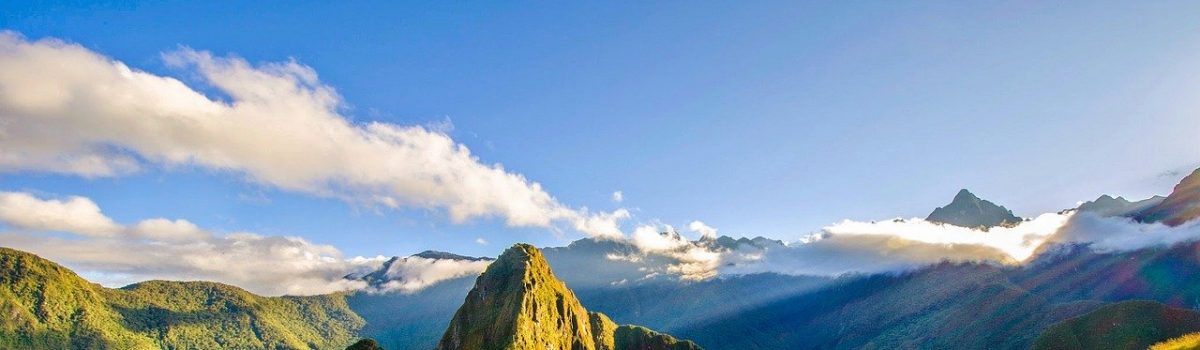
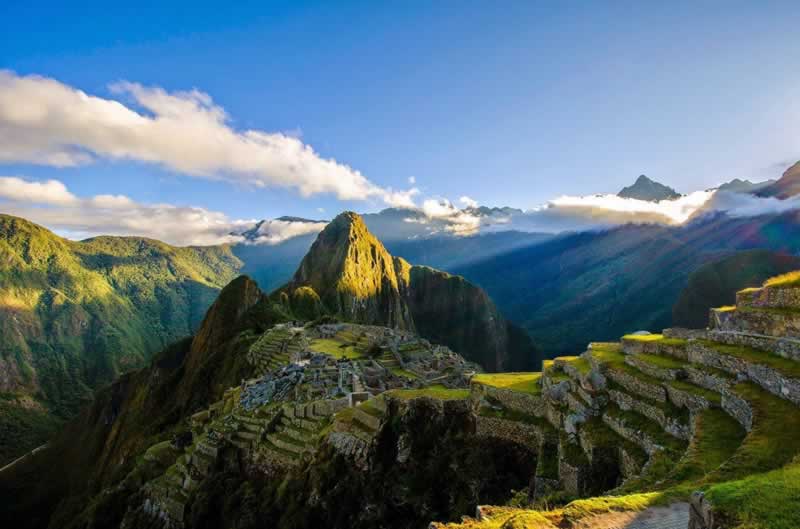
Machu Picchu, located in Cusco, will officially reopen its doors to international travelers, under a series of health rules and protocols. Our Globe Aware Peru program offers a separate tour to the famous Inca grounds, but requires booking ahead of time.
Peru: Machu Picchu reopens its doors to national and foreign tourists
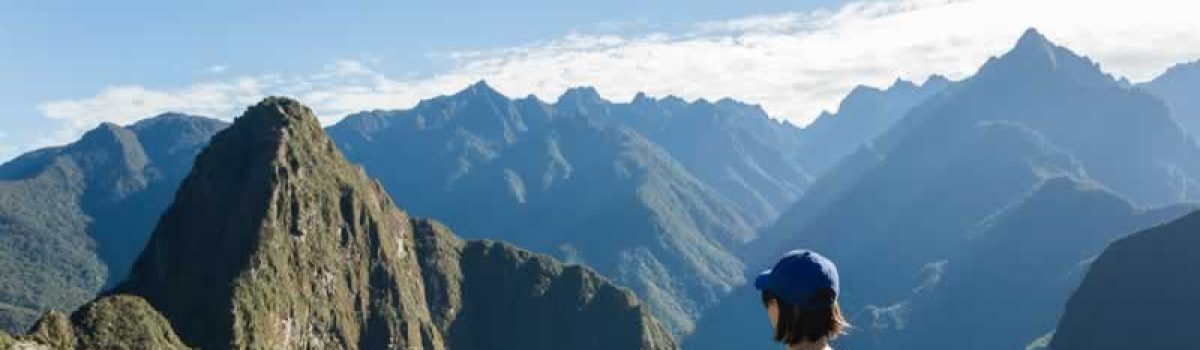
The emblematic Inca citadel of Machu Picchu, located in the Andean region of Cusco, will officially reopen its doors to national and foreign tourists today, under a series of health rules and protocols —after being closed for almost eight months due to the COVID-19 pandemic.
The expectations caused by the reopening of this tourist jewel was so colossal that it caused entrance tickets —valid for local and national tourists thru November 15— to sell out fast.
The emotion —without any doubt— is immense, because tourism in Machu Picchu will officially resume, after a first attempt in July, which was discarded since coronavirus infections continued to increase in Cusco —the region hosting the citadel.
Machu Picchu
Since Machu Picchu opened its doors for tourism purposes in 1948, it had only closed for two months in 2010, when a flood destroyed the railway from Cusco.
The numbers registered in Machu Picchu —declared a World Heritage Site by UNESCO on December 9, 1983— were impressive.
Before the pandemic began in Peru last March, between 2,000 and 3,000 people used to enter the citadel per day and in high season up to 5,000.
That month, on the last day of visits, 2,500 people were registered in the area.
Protocol
According to the protocol established to prevent the spread of COVID-19, daily access to the world wonder will be limited to 675 visitors per day —30% of the total authorized number in a normal season.
Visitors must enter the archaeological park in groups of 8 guests —including a guide— and must comply with social distancing of 1.5 to 2 meters.
Likewise, each sightseer must wear a face mask, avoid crowds, and have his/her temperature measured to verify that he/she do not have a fever, as part of the biosafety protocols at this stage of the new normality.
The official reopening ceremony will kick off today at 6:00 p.m. (local time).
Countries re-opening to tourism as lockdown restrictions are eased
As lock down restrictions are eased in many countries, borders are being opened up again too. Many countries rely heavily on travelers during the summer therefore it is vital for the economy to get tourists vacationing back in their country again.
Where can I travel this summer? Countries open for tourism
June 15, 2020
The coronavirus has forced several countries to close borders and airline companies to ground flights but what countries can I travel to this summer?
The coronavirus continues to spread in some areas of the world and is fluctuating in others from week to week. As lockdown restrictions are eased in many cities and countries, borders are being opened up again too. Many countries rely heavily on tourism during the summer with Spain, for example, relying on the tourism industry for €159 billion a year and 2.65 million jobs. Therefore, it is seen as pertinent to the health of the economy to get tourists back into the country.
Globe Aware volunteer recognized for community service will share in a Lions Club scholarship as she prepares to attend Duke University.
Saratoga Lions Club Awards 2020 Scholarships
THURSDAY, 11 JUNE 2020 BY SARATOGA TODAY
SARATOGA SPRINGS — The Saratoga Springs Lions Club Scholarship Committee proudly presents $32,500 in academic awards to seven Saratoga Springs High School Seniors. All seven seniors are pursuing four-years + in academic programs with diverse fields of study.
It is disappointing that the annual Lions awards luncheon was unable to be held this June, however, we are anxious to share these students and the honor they receive for their hard work and perseverance during this difficult senior year.
With the COVID-19 pandemic’s devastation to tourist destinations such as Mexico and South America, it’s time to consider creating “travel bubbles. Volunteer vacation destinations closer to the U.S.’s proximity may be more likely to open for travel.
U.S. ‘Travel Bubbles’ Would Let Us Fly Safely and Bring Back Millions of Jobs
With the COVID-19 pandemic’s devastation to tourist destinations in Florida, the Caribbean, Mexico and South America, it’s time to consider creating “travel bubbles.
Andres Oppenheimer Miami Herald (TNS) May 26, 2020
With the COVID-19 pandemic’s devastation to tourist destinations in Florida, the Caribbean, Mexico and South America, it’s time to consider creating “travel bubbles” — or corridors — between countries. That’s what Australia and New Zealand have just done, and it should be done everywhere.
Granted, it may be too soon to expect a significant resumption of international travel in the Americas. But it’s time to start planning for it.
A family' s tradition of sending grandchildren, once they reach the age of 16, on trips to introduce them to different cultures and people and around the world continues. Here is a travelogue entry by Zeth to Guatemala with Globe Aware. Previous grandkids selected volunteer work in the Andes mountains of Peru, with the Roma people of Romania and in a small rural village in the West African country of Ghana.
Day One: Lake Peten Itza, El Remate, Guatemala
Moments like yesterday are why I' m a travel junkie. The guys still asleep, I took an early walk along a small road where we' re staying. What a treat! No city noise, only the idyllic sounds of nature: tropical birds unlike we hear at home … the occasional cry of a monkey, perhaps chiding her youngster … insects buzzing … and the crunch of my footsteps along the gravel-dirt road.
After a while a small older man walked in my direction, and I offered my best "Buenos dias, senor." He offered me a mostly toothless smile and gently reached out toward me " but not his right hand, as if to shake hands, his left hand. He held onto my hand and we had this wonderful nodding and eye-to-eye exchange while he said something I couldn' t understand. Had he been an American in the U.S., I would have likely averted my eyes and pulled back thinking, "Why is he still holding onto my hand?" But he just continued to smile with old soul eyes and, as we parted, he blew me a kiss! For me travel is less about the big Eiffel Tower/Pyramids/Vatican imagery, and more these small, magical moments when we have real human contact with people we would otherwise never encounter. Blissful!
Day One was mostly orientation and a few hours of R&R. Globe Aware’s local organization is Project Ix-Canaan, founded by Canadian Anne Lossing who came to Guatemala 20+ years ago toward the end of Guatemala' s long civil war. She wanted to empower the local Mayan community to protect their own rain forests, and identified the community first needed health, education and opportunity.
Over the years she and her Guatemalan husband, a doctor, have established a medical clinic and a dental clinic (at left) which is staffed largely by visiting clinicians from the U.S. and other places. (No patients on the weekend, so it was empty.)
They also have established an after-school youth development center and a women' s center, each of which we toured today.
We also visited a school where we' ll be teaching later in the week, and Anne pointed out shards of pottery on the ground " at least hundreds but easily 1,000 or more years old " that can be found in several places in this region called Peten. The Mayans believed that vessels had a kind of spirit and they would break most of their pots during sacrifices or in burials, and also every 40 years to start a new beginning.
A Fresno State lacrosse player shares her eye-opening volunteer travel experience in Peru and living with and learning from the Cuzco community. Enjoy!
FRESNO, Calif. – For many college students summer vacation is a prime opportunity to visit with family and friends, go on vacation, attend concerts, make memories and escape from the books and mile high piles of lecture notes.
For Fresno State lacrosse junior attacker Lauren Kiszely, summer began with an experience that not many people get the chance to have. The Robbinsville, N.J. native kicked off summer 2019 with an eye-opening two-week volunteer trip to Cuzco, Peru.
Kiszely was approached with the idea by a pair of former high school lacrosse teammates who had done the trips before. She was immediately interested and began to pack her bags for the trip.
The group traveled to South America with a nonprofit organization called Globe Aware. The organization’s ultimate goal for its trips is to encourage people to give back in unique ways. One of the key concepts of the volunteer trips is to understand the cultural differences in these countries and be able to recognize and appreciate the differences that these cultures bring, instead of trying to change them into something that they cannot become.
That is exactly what Kiszely learned.
“It was very humbling,” said Kiszely. “We learned a lot about how people live in these communities. It was a very gratifying experience that I will never forget. It made me appreciate everything that I have here at home.”
The way of life is different in Peru than it is for a Fresno State student-athlete in California. With a major culture shock, Kiszely learned quickly that things are not the same.
“They cook by burning stones and dirt, then they cook their food in the dirt,” added Kiszely. “They don’t use running water. They don’t have bathrooms. All of their clothes are hand-made. Many people use animals as a means of transportation. It was just so different.”
Globe Aware takes two week trips and sets the first week for volunteer work and the second for exploration of the country.
They stayed at a boarding school for the kids who lived in communities that did not have any kind of higher education. Kiszely and the other volunteers spent their time going around to the different schools around Cuzco and learning about their ways of life.
During the first week, Kiszely and her group worked on different projects in smaller villages such as building staircases, painting and sanding down supplies that were needed for larger projects. They also had the opportunity to help a family build a stove out of mud and straw.
Outside of the hands-on volunteer work, they also helped the local children to enhance their English speaking skills.
“At night, we hung out with the kids and taught them English through different games and activities,” explained Kiszely. “We also helped them with their homework and we were almost like tutors for them.”
In the second week, Kiszely was able to explore Peru with her group and see the beauty that the ancient sites had to offer. The junior Bulldog had the opportunity to climb Rainbow Mountain and Machu Picchu, visit a small beach town called Paracas, and go sand boarding in the desert at the Huacachina Oasis. The group capped their trip with a stay at Peru’s capital city, Lima, before heading home.
In a big, yet small world, Kiszely got the chance to meet up with Fresno State lacrosse senior goalkeeper Laurel Maunder while in the foreign country. Maunder got the chance to study abroad in Peru at the beginning of the summer.
After living in Peru for two weeks, it is safe to say that Kiszely has a new outlook on life and the things that a lot of people often take for granted. Our lives, whether they are in a rural society or in a more advanced one, need to be valued deeply.
“I would 100 percent do it again,” said Kiszely. “I am already looking to do another one next summer. I highly recommend that if given the opportunity, everyone should go and experience how other countries live their daily lives and see how different the culture is.”
“Fresno State Athletics: The Pride of the Valley” – The Bulldog Foundation creates championship experiences for Fresno State student-athletes as they strive for excellence in the classroom, in competition, and in life. To become a BDF member, please call 559-278-7160.
Driftwood, broken fishing nets or flip-flops may be rubbish to many people, but through the skilful hands of Hồ Công Thắng, who resides in An Bà ng Village in Hội An, this detritus is transformed into unique objects.
When he was younger, Thắng realised he had a passion for turning rubbish into useful objects. He could spend hours working on his creations.
In 2016, he returned to Việt Nam after three years working in Japan as a shipbuilder. He chose Hội An to settle down as he thought the tourism destination would be a good market for handmade souvenirs.
His workshop is filled with old light bulbs, bottles, jars, boxes and bits of household appliances.
The old bottles can be painted and used as plant pots, while old wooden doors have been carved into decorative fish.
Sometimes, customers suggest ideas for his latest product.
The craftsman has sold thousands of wooden fish over the last two years, proving the popularity of his designs.
Yet each product takes many hours to design by hand.
"Though I make many products according to the same design, each item has unique details," he told Quảng Nam newspaper.
"When it comes to decorative objects, industrial production lines kill creativity," he said.
"If we know how to use and recycle waste and create new objects, it will save our natural resources," he added.
His team of three to eight workers (depending on the number of orders), have tried their best to meet demand from localities like Bình Dương, Phan Rang, Nha Trang and HCM City.
He is planning to co-ordinate with a local protection centre to offer jobs to needy children and the elderly.
Thắng has also collaborated with various organisations to display products with environmental messages.
His Goby fish sculpture made of iron and netting is being exhibited at An BÃ ng Beach as part of an initiative by the Globe Aware group, which includes foreign volunteers living in and visiting the coastal town.
He also helped the group make a " Blessing Box' near An BÃ ng Beach so people can leave things they no longer need for others to take.
GIVE AND TAKE: A foreign visitor by the " Blessing Box' on An BÃ ng Beach – photo.
“Later this month, we’ll make another Goby fish trash bin to place at nearby Cá»a Äại Beach and another give-and-take wardrobe,” Thắng told Việt Nam News.
“I think that he is very talented and thinks outside the box,” said Francesca Supple, a tourist from California who is part of the Globe Aware team in Há»™i An.
“His work is so unique and looks nothing like what we see in the United States,” she said. “I wish there were more young artists like him in the US.”
Nachesa Supple, Francesca’s daughter, said his work was both beautiful and functional because it made a positive impact on the community.
“I love how enthusiastic he is about making public sculptures to raise people' s awareness of the environment,” she said. “He is spreading a very powerful message and helps people realise how society can deeply impact nature.”
In May, Thắng’s team helped the Mekongaholics environmental group make a giant tortoise from recycled materials at Ông Beach on Cù Lao Chà m Island.
The sculpture was made from an old bamboo boat, fishing nets, plastic bottles and ropes collected on the beach.
The installation has attracted many tourists. It also won first prize at the Art of Recycle Awards hosted by the UNESCO Office in Việt Nam and the Coca-Cola Foundation.
“I like this sculpture and other small souvenirs Thắng designed,” said Nguyá»…n Thị Thắm, a local student, who also works voluntarily for the Globe Aware group.
“I help Thắng’s team do environmental and community projects,” she said. “He’s so friendly and warm. Foreign volunteers like him a lot.”
Thắm said he showed them how to make things in an artful and creative way. She also said his only drawback was that he didn’t speak much English, which hindered his capability to communicate with foreigners.
“Like other people living in Há»™i An, I recognise climate change has been caused by humans,” Thắng said. “I want to make a small contribution to raising people’s awareness of making the earth clean and improving the climate.” VNS


 Moments like yesterday are why I' m a travel junkie. The guys still asleep, I took an early walk along a small road where we' re staying. What a treat! No city noise, only the idyllic sounds of nature: tropical birds unlike we hear at home … the occasional cry of a monkey, perhaps chiding her youngster … insects buzzing … and the crunch of my footsteps along the gravel-dirt road.