11 reasons why you should travel to Laos right now

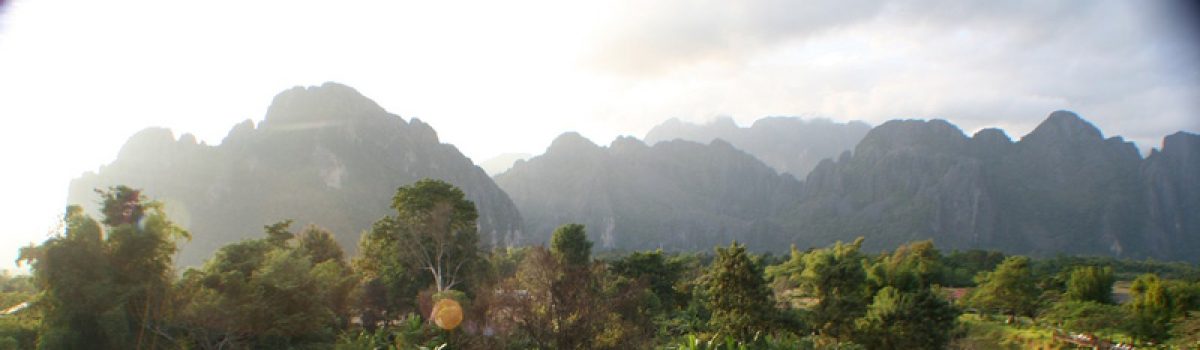
Laos is a beautiful, tropical, and mostly untouched country that is becoming an up-and-coming destination for travelers looking for an authentic taste of South-east Asia, due to this, the rewards here are plentiful. It may not be as developed as neighboring Thailand, or Vietnam, though this is exactly Laos’ uniqueness and charm. Experience Laos with Globe Aware.


11 reasons why you should travel to Laos right now

ABHISHEK DWIVEDI
22 March 2021
PICKVISA

Laos
is a beautiful and small country located in Southeast Asia. Myanmar and China surround the country to the northwest, Cambodia to the east, Vietnam to the south, and Thailand. Since ancient times, this country is also called the land of thousand of elephants. That is, the elephant here is famous in the world. People come from each corner of the world to see it. North of Laos is China and North Vietnam, Cambodia in the south, Mekong River on Thailand’s border in the southwest. Due to which the climate here is tropical, about 2/3 of Laos’s area is full of nature’s beauty and forests. Elephant, leopard, cheetah and snake etc., are found in the lush green forests here. If you travel to Laos, you should know that the colloquial language here is Thai, using Sanskrit, Pali and French words. Additionally, French is the second language of royalty. Like Cambodia and Vietnam, Buddhism is the predominant religion here. People like cuisine here very much. If you are a fan of adrenaline, then here are underground river caves, white water rapids and jungle ziplines, which you can enjoy and make your trip memorable. It would be nice to take the pictures to turn this trip into memories. Let’s know why you should travel to Laos.

Read More

Dallas-Based GlobeAware Organizes ‘Voluntourism’ Trips of a Lifetime

March 5, 2023
By Joy Donovan
Candy’sDirt

Landmines — the explosive leftovers from the Vietnam War and other conflicts — are about the size of a toy and sometimes colorful, making them attractive to children. Two decades of war made these weapons of destruction plentiful in the forested landscape of Southeast Asia. Consequently, many children in Laos, Thailand, and Vietnam are living as amputees.

The memory of one of those injured children receiving a wheelchair is seared into Kimberly Haley-Coleman’s mind.

Read More

Rising Stars: Meet Kimberly Haley-Coleman

SEPTEMBER 23, 2021
VoyageDallas

Today we’d like to introduce you to Kimberly Haley-Coleman.

Hi Kimberly, so excited to have you on the platform. So before we get into questions about your work-life, maybe you can bring our readers up to speed on your story and how you got to where you are today?

My career has been circuitous, to say the least! From training on-air CNBC staff in financial tools, putting dead people into space with Space Services, working at museums and start-ups! But I found my true calling when I founded Globe Aware a couple of decades ago, organizing experiences that allowed people to have fun helping people. These short-term experiences in 26 countries are designed to give back, show participants a side of the culture they are visiting in a way they never would, but also to make a huge social impact in a short amount of time. Prior to Globe Aware, such experiences were primarily the domain of high school and college students or of churches or meant a 2.5 years Peace Corps commitment. Since then, the organization has grown in ways we could never have anticipated. For example, now corporations send their staff through us, using contribution matching, paid Volunteer Days Off, allowing tax deductions for portions the staff member pays for, etc. BUT THEN the pandemic. Borders closed, travel safety called into question, the world stopped, and I decided to temporarily pivot. And THAT is what led to my creating The Tickle Bar, America’s newest and most unique affordable luxury.

Read More

U.S. to split 55 million Covid vaccine doses between Latin America, Asia and Africa

Positive news to share with our Globe Aware volunteers and coordinators! The U.S. announced it will send 55 million Covid-19 vaccine doses to countries in Latin America, Asia and Africa, in order to “defeat COVID-19 and to achieve global health security.”


U.S. to split 55 million Covid vaccine doses between Latin America, Asia and Africa

JUN 21 2021
Berkeley Lovelace Jr.

The Biden administration announced Monday it will send 55 million Covid-19 vaccine doses to countries in Latin America, Asia and Africa as the coronavirus continues to rapidly spread in low- and middle-income nations.

The 55 million vaccine doses are the remaining portion of 80 million shots President Joe Biden has committed to donating abroad. Earlier this month, the administration said it would send the first 25 million doses to South and Central America, Asia, Africa, neighboring countries and U.S. allies.

Read More

The Top Eight Destinations for Female Solo Travelers

Traveling alone isn’t always easy especially as a solo female traveler in a post-pandemic world. Globe Aware is the perfect option, providing a personal itinerary and English speaking coordinator at all of our program locations, including Laos, one of the destination’s mentioned.


8 Destinations for Female Solo Travelers, According to the Pros

From Amsterdam to Cartagena.

BY SHANNON MCMAHON
May 5, 2021

Empowering, exciting, challenging: Few things are more rewarding than solo travel—and pre-pandemic, research showed it was on the rise, especially with women. Sure, you might have to ask a complete stranger to take that photo of you walking across Tokyo’s Shibuya Crossing or standing outside of Barcelona’s Sagrada Família, but it’s a small price to pay for the freedom to plan a trip exactly how you want it, when you want it.

Read More

Trips that will lift your earning potential

Writer Morgan Quinn looks at volunteer vacations for U.S. News & World Report and considers the career and résumé they may hold.

6 Vacations That Will Boost Your Résumé

These trips will give your earning potential a lift.

By Morgan Quinn

April 30, 2015

Game-Time-6891No matter how many corners you cut and airfare deals you score, taking a vacation is expensive. What’s more, many Americans avoid taking time off altogether because they’re worried how it will affect their careers. A 2014 Glassdoor survey found that U.S. employees only use only half of their eligible paid vacation and paid time off. A U.S. Travel Association study last year also found that nearly half of employees continue to check their work email when they do go on vacation.

What if you could take a vacation that would help your career – not hurt it? What if your time off added valuable skills to your résumé and even put you in line for a promotion when you returned?

A growing trend among American workers and recent college graduates is the volunteer vacation, where travelers work their way through various cities around the world, adding skills, learning new languages and boosting their earning potential. If you want to take some time off to travel this summer – while still working on your career – try one of these vacation ideas.

1. Learn a language. Taking language classes in another country gives you the opportunity to immerse yourself in local culture and hone your linguistic skills, both inside and outside the classroom. Classes and prices vary, but there are numerous programs that help foreigners study languages around the world, including French in Quebec City, Spanish in South America or Japanese in Tokyo. Whether you are learning a language from scratch or just brushing up on your skills, you’ll return home with a new section to add to your résumé and some real-world experience.

2. Volunteer on an organic farm. Do you want to get your hands dirty this summer? The World Wide Opportunities on Organic Farms organization links volunteers with organic farms for a unique work experience. In return for volunteering, WWOOF hosts offer food, accommodation and opportunities to learn about organic lifestyles and farming. WWOOF farms exist across the globe, from Argentina to Thailand.

The length of stay is negotiated between the host and volunteer, with visits as short as several days to as long as half a year. This is a truly one-of-a-kind experience for people looking to add organic farming and sustainable agriculture experience to their résumé.

3. Practice a trade. If you’re handy with a hammer or looking to get construction and contracting experience, there are a variety of opportunities to lend a hand to an organization in need of volunteers. For instance, Habitat for Humanity offers an international program that organizes volunteers to build well-constructed, affordable shelters for people living in poverty. Another organization, HistoriCorps, works with volunteers to restore historic sites on public lands throughout the United States.

4. Teach overseas. No matter what industry you work in, teaching is an impressive addition to your résumé. Plus, the huge availability of teaching positions across the globe means you can find a tenure that works for you. You can also choose whether you’d prefer to work with children, teenagers or adults.

There are overseas teaching programs like The English Camp Company, which organizes summer camps in Taiwan, Italy and Austria for kids ages 6 to 14. Volunteers have the opportunity to tutor campers in English, live with families and experience authentic local culture firsthand.

5. Conduct scientific field research. If you’re a science enthusiast or interested in exploring ways to make our planet more sustainable, this type of vacation is for you.

Earthwatch Institute expeditions send volunteers to do field work side-by-side with leading scientists. Volunteers work directly under the supervision of experts and get the opportunity to collect data and work as a full-fledged expedition member. Not only will you add an impressive and memorable experience to your résumé, you’ll help the world’s top scientists conduct research that makes our planet a better place to live.  

6. Work with animals. If you already have experience working with animals or are simply an animal lover, consider taking a vacation to volunteer at a facility that helps injured or abandoned animals. You can spend a few days or a few weeks giving hands-on care to furry friends who need your help.

For example, the Earthwatch Institute offers a weeklong trip where volunteers monitor threats to ocelots in Trinidad. The Pacific Whale Foundation sponsors a free program, Volunteering on Vacation, for Maui visitors who want to help protect the island’s rare and endangered species.

Just a word of caution: All these vacations may be in historic, beautiful or exotic locations, but they are definitely not a day at the beach – so be prepared to get down and dirty.

U.S. News & World Report

Volunteer Abroad

Writing for The Huffington Post’s Blog, University of Southern California student Rachel Scott examines the benefits of traveling abroad, immersing herself in foreign communities and cultures and discovers the secret to the most fulfilling travel adventure is to volunteer abroad.

Don’t Just Go Abroad — Volunteer Abroad

Ask anyone about their study abroad experience, and they will tell you it was nothing short of amazing. But there is a secret to making it even better — volunteering.

I took my first trip abroad to Thailand this past December and found myself bringing in the New Year in a new country with new friends and an interesting new perspective on life. I spent nearly three weeks stepping out of my comfort zone, exploring the land, riding elephants, feeding monks, shopping in night markets, learning a new language and appreciating new foods and culture. While the spices of Thailand tickled my tongue and the temples sparked an interest for learning, I can’t begin to tell you about my trip without telling you about the lives I tried to touch and how they touched me.

I traveled to Thailand with 17 other amazing American students who decided to give up their entire winter break, including Christmas and New Years to help those in need. We partnered with an organization called Travel to Teach, and together we headed to two different schools in Chiang Mai. We had the opportunity to work with primary school children from poor backgrounds, who didn’t have much. It was at one school where I came across a teenage boy who gave himself that nickname, Laos. He fled from Burma with his family, hoping to get a better life in Thailand. I would soon learn that he was among dozens of other children in the same position. At his school, more than 90 percent of the children were Burma refugees or children of Burma refugees. For nearly all of them, we were the first Westerners they had ever seen.

Laos was taken back by our differences and was stunned to learn that we had traveled across the world to teach. Although he was a teenager, he was in classes with children who were two to three years younger than him. He knew the most English out of everyone in the group, often translating for the rest of the students. Laos took such pride in school, he was happy to be there and looked forward to learning as much as he could. For the next week I would work with him and dozens of other students, teaching English and helping with tasks around the school. While many of the students impressed me as students in the classroom, I was more impressed by the conditions in which they lived in and how they got to school.

At the end of the first school day, I walked with Laos and several students down to the driveway, where I assumed they would be picked up by their parents and taken home. Laos waited for his little sister, who was several years younger and also attended the school. As he waited, he told me that the two bike nearly an hour just to get to school. He told me his sister rode on the back of his bike, while he pedaled all the way home. I began to wonder how the other children arrived to school and how they got back home. I turned around and saw dozens of children piling into a van and dozens of others climbing into the back of a pick up truck. I sat there and counted, watching as 16 kids got into one van. I looked inside and noticed how they were all packed in together, none wearing seat belts. Yet, they didn’t seem to mind. These young girls and boys weren’t complaining about the time it took to get to school, their family conditions or even the fact that they had to go to school. Rather, they were eager to get an education and delighted that a group of “Westerners,” as they called us, had traveled thousands of miles just to be with them.

We were just as delighted to meet them and excited to help in whatever way we could. We taught them English, an important skill to have in order to move up in Thai culture. Learning English not only gives a way for Thais a way to compete in tourism, one of the country’s main industries but it can also give access for students to attend international schools and gain other educational opportunities. We helped rebuild their school — building a water fountain, painting classrooms, building a wall to block out the noise from the street and donated money to help sustain the institution.

Despite the language barrier, it was amazing how much we could communicate without saying much at all. Many of us came to Thailand to help those in need but in the end we were the ones that perhaps received the most. We each developed our own relationships with the children and they left lasting impressions.

“One of the students that I got attached to was little Fai,” Juan Ramirez, a student-volunteer on the trip said. “Fai was around the age of 10 and was one of the shyer kids,” he continued. For several days, Juan worked with Fai teaching her English and working on her vocabulary. “I remember the last day of school was so sad, especially when I had to say goodbye to Fai. I saw her eyes tearing up,” he said. The experience changed Juan’s perspective on his own education. “There have been times where I complained about our public schools,” he said. “There were times when a child’s textbook was falling apart or their pen would barely write. Even though they had so little, they still seem so grateful. It just brings into perspective that material possessions don’t bring happiness,” he said.

Perspective was perhaps one the greatest gifts I received from the children in Thailand. I can go on and on about things they didn’t have but what was even more remarkable, is what they did have. They had happiness, joy and were full of life. They were respectful of each other, their elders and protected those who were younger than them. The children of Thailand were fearless, caring little about material objects and more about human interaction. As we left, I couldn’t help but feel so incredibly thankful for how they helped me and how much they pushed me to be a better individual. Just when I thought I couldn’t be more surprised by their strength, kindness and endurance, I was wrong.

On the last day at the school, two students who nicknamed themselves Nooey and June ran up to me with gifts. Before giving me a tight hug, they handed me a flower and a bear. They both began to cry. Yet again, I was amazed. The two little girls, who had almost nothing still found something to give. They didn’t have money to buy anything so instead they gave me their own personal belongings to show their gratitude. It was about the gift that meant so much to me but the gesture that made all the difference.

So I urge you not to just go abroad but to volunteer abroad. Push yourself out of your comfort zone and away from the typical tourist experience. It will be challenging, in many cases a culture shock — but it will reward you a thousand times over. As student volunteer Sahil Dhailwal said, “It’s sometimes so easy to forget that other nations and millions of other people with other languages, customs and traditions exist. This experience definitely opened up my interest in wanting to travel more and continue doing service.”

So take the road less traveled — explore, volunteer and open up your mind. You’ll learn that service is a two-way street and you may be surprised with who receives the most at the end.

The Huffington Post

Voluntourism offers many options

‘Voluntourism’ options available for all budgets and schedules
 
laos2Many people know all about “voluntourism,” the option of volunteering while traveling. But not all of us can – or have the time to – spend vacation doing more work, even if it’s in a beautiful locale.

However, there’s a growing trend that lets people still kick back during most of their time off but still kick in to help the local community.

Kim-Marie Evans enjoys seeing the world first-hand and sharing it with her children. She finds ways for her family to have a good time but also do good.

“Exposing them not just to the hotel pool and the kids club, but exposing them to the local culture, to the children and getting them a chance to really get to know the locals changes their opinion of what the world is like,” she said.

Her daughter Macie believes this only makes vacation better.

“You got your time to relax but you also did something that was very meaningful and actually got something out of your vacation,” Macie said.

They’ve stumbled upon a new mini-version of “voluntourism” where you donate just a bit of time or supplies instead of dedicating an entire week of work.

“Traditionally, travelers who were attracted to voluntourism were people with a lot of time, say college students or retirees. Now, with a lot more drop-in opportunities for short-term experiences with voluntourism, pretty much anybody can get involved…families, couples,” Anne Banas of Smarter Travel said.
She said the options vary.

"Sometimes it’s as simple as reading to the local school children, donating school supplies, or even helping out at local soup kitchens or making repairs that they otherwise wouldn’t have the resources to do that,” Banas said.
And the opportunities are easy to find.

“You could go through your hotel or resort, as well as cruise lines, theme parks,” Banas said.

“Look toward local tourism boards who are actually doing something, who can advise you,” Jason Clampet of Skift.com said.
Clampet works for the site Skift.com, which monitors travel trends. He stresses you really need to do your homework before you go beyond the resort walls. First, be honest about your skills.

"You can fix a paper jam but you probably can’t dig a well, and if you actually can’t offer a specific set of skills, is there money that you can give in a certain instance that can help people who do have those skills,” he said.
If you do decide donating money is best, be careful.

“Sometimes your money’s not actually going to the organization that you’re trying to help, so you really want to make sure you’re dealing with reputable organizations,” Clampet said.
Another suggestion: buy local.

“Shopping at local farmers markets, when you’re eating out at a restaurant, look for mom and pop independently owned,” Clampet said.
Kim-Marie likes doing a bit of everything.

“You get to take home very different memories than if you had spent all of your time at the resort,” she said.
Another tip from Skift.com: you may want to investigate how the company you’re dealing with – whether it’s a cruise line, hotel or theme park – treats its employees, especially if it’s arranging programs for giving back. Skift says that’s a good way to see if they’re truly interested in caring for the community around them or putting together programs for promotional benefits.


NewsProNet

The Best Places for Everything

Travel writer Peter S. Greenberg offers some warm praise for Globe Aware in his latest book, The Best Places for Everything: The Ultimate Insider’s Guide to the Greatest Experiences Around the World.

On the Chapter titled “Voluntourism”, Greenberg lists some of the great organizations that offer amazing volunteer vacation experiences. "Globe Aware offers 1-week volunteer vacations that combine hands-on experiences with cultural activities. To get the most for your travel dollar, look for destinations like Mexico, Laos and Cambodia where you can get accommodations, meals, excursions and volunteer activities for about $1200 a week. Projects vary, but in Cambodia you might teach English at a Buddhist school or get involved with a children' s center in Luang Prabang. www.globeaware.org"

Greenberg, CBS News Travel Editor reporting regularly on The Early Show, its replacement CBS This Morning, and the CBS Evening News, is best known as the Travel Editor for NBC’s Today, CNBC and MSNBC from 1995 until 2009, says he wrote The Best Places for Everything because he is "constantly being asked by just about everyone to name my choices for best, and the travel categories are almost endless. After resisting for many years (partly because I didn' t think I could give it the completeness it needed,) I' ve now been able to compile the Best Places for Everything. Its based on my personal travel history of comparison and constant points of reference, relevance, and long-term value. In this book, I answer the question of "best" with a caveat: It' s not done in an arbitrary way, but by personal experience, measured by relative terms, not absolute or impossible ones.

"I was at an editor' s conference, and an Indiana newspaper' s travel editor said: " We feel that if we don' t have something nice to say about a place, we just won' t say it.' I couldn' t believe a professional journalist would make such a statement! I immediately stood up and challenged him. " If that' s your philosophy, you should resign,' I said. " You' re being irresponsible to your readers. What you are describing is a newspaper that is an advertising vehicle for the travel industry, and as such it has no credibility.' There is no room in travel journalism for quid pro quo approaching to reporting. From that moment, I' ve kept a running file of my own bad travel experiences (compiled in his book titled Don' t Go There about all sorts of places and companies he does NOT recommend).

Greenberg has visited every U.S. state multiple times and 151 of 196 countries around the world. "With each trip, my list of where not to go grows. I know I will be accused of being unfairly subjective and that I have somehow violated the spirit of travel journalism by not being a promoter of travel. Well guess what? I have never worked for the travel industry. I report on it – – good(and sometimes very good), bad, and yes, quote often ugly. Travel writing is not being part of a popularity contest. Like all other reporting, it' s about presenting' not promoting' facts that allow people to make reasonably intelligent, independent decisions about choices available to them."


Self

Your travel queries answered

The experts Your travel queries answered *Volunteer Vacations


“I have heard of volunteer vacations and am thinking of undertaking one this winter. Where would you suggest I go, and how should I plan the trip?”

STEVEN ROSE Founder and executive director Cross Cultural Solutions


ARJUN SHARMA Managing director. Le Passage to India Select Group


KIMBERLY HALEY COLEMAN Executive directo, Globe Aware  
Meaningful volunteering can be as simple as sharing love and affection with orphans. or practicing conversational English w1th adults seeking new career opportunities. We at Cross-Cultural Solutions (www. crossculturalsolutions.org) have sent over 26,000 volunteers to 12 countries since 1995. including our founding programme in India. Volunteers in Dharamsala. for example,have assisted teachers in special education. In Peru. volunteers have cared for people with disabilities. When planning, consider the region you want to explore, the type of work that interests you. and the time you can allocate.I recommend selecting an organisation that provides positive impact within the communities served.  Volunteer tourism is a great form of travel that allows you to make a difference while on holiday. When choosing a destination. your prime consideration should be the kind of volunteer work you will be comfortable with-whether it’s environmental conservation.teaching or animal welfare. Also choose a project based on the time you can commit to it you can choose to volunteer from two weeks to two months. Your options are varied. from teaching in Cambodia and volunteering at an orphanage in Goa to working With elephants in Kerala and raising lions in South Africa. Book through a reliable tour company. as travelling independently can be challenging and finding the right project difficult. The good news is that the destinations are virtually limitless. The bad news is that there are so many companies conducting volunteer tours that it’s difficult to choose one over the other. Most companies offer programmes from one to 52 weeks. With genuine need virtually everywhere narrow your options down by selecting a place to which you have never been or to which you have an attachment. In Jaipur for example, Globe Aware (www. globeaware.org) volunteers can help children in extreme poverty with basic needs. (Other safe destinations with urgent need include Thailand. Laos and Peru). Once you’ve compiled a list review itineraries of agencies that offer such trips and contact former volunteers who have gone on their programmes for feedback before you make a decision. Reputable companies will gladly give out references. Many organised tours include the cost of food, accommodation, local transport, insurance, orientation material and a guide. Finally, know where your money is going: read up on how the organisation you pick spends its funds. Habitat for Humanity and Doctors Without Borders are two good options.   
    GOT A TRAVEL QUERY?
Email us at askCNT@condenast.in and our panel of experts will answer it. For more, www.cntraveller.in


Self

Archives